
Quick Facts About Car Frame Damage
- Modern cars use unibody construction, with the frame and body skeleton manufactured as a single structure.
- Depending on the severity of the damage, frame damage is repairable.
- Insurance companies usually declare the car a total loss if repairing the frame damage on a vehicle costs more than its value.
As a car owner, you may never need to worry about diagnosing car frame damage and then plotting a course of action. Most collisions severe enough to cause serious frame damage will involve insurance adjusters. They will determine whether to repair the frame or rate the vehicle as a total loss. However, it’s helpful to know what car frame damage is and your options if faced with that situation.
Our goal here is to provide you with some basic general information on car frames, how they might be damaged, and possible courses of action.
What Is a Car Frame?
In the purest sense, a car frame is the base on which the body rests. However, today, there are primarily two types of car frames. That’s because the method for assembling cars, vans, and smaller SUVs evolved during the past 70-or-so years. The original construction method is body-on-frame, and the more current is unibody.
What Is Body-on-Frame?
Until the 1970s, most vehicles were assembled by bolting the vehicle body to a rigid frame. Today, this construction technique is reserved for pickups and a few large SUVs and vans. Its main advantage is allowing more flexing at the joints because they are screwed together with nuts and bolts. This flexing is beneficial when towing a heavy load or during intense off-roading. The body-on-frame design is engineered to withstand the force of a crash rather than absorb it, as unibody construction does. Therefore, it can take more punishment before the frame is affected.
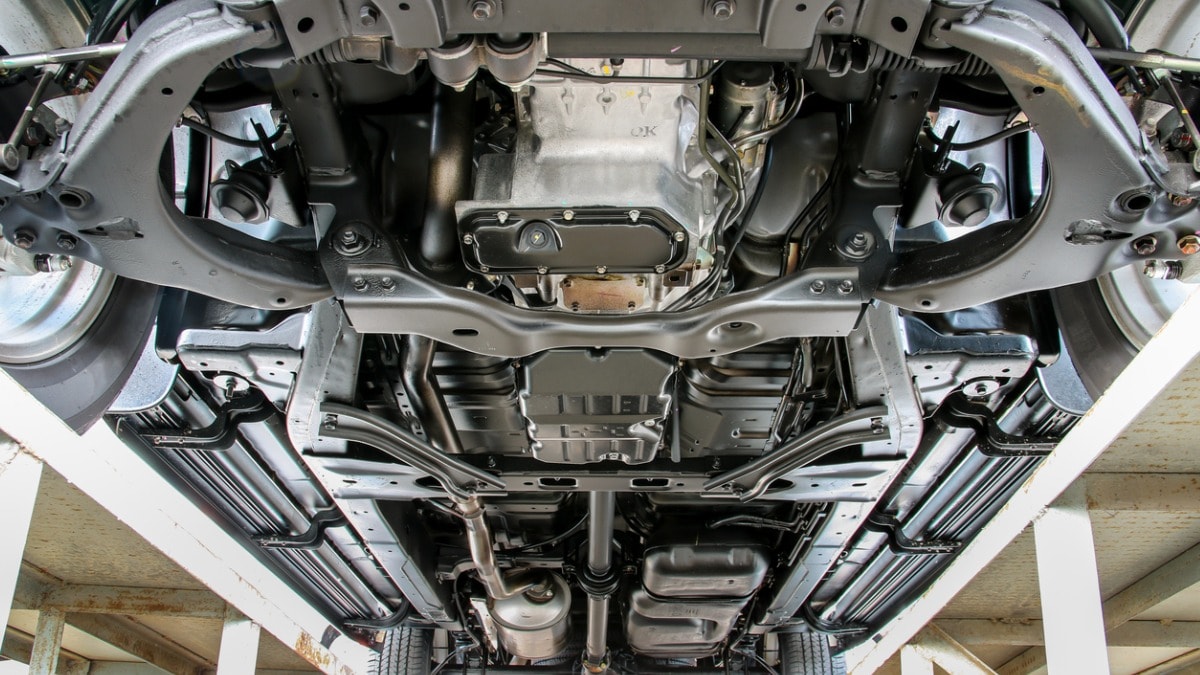
You can identify a body-on-frame vehicle by its ladder frame consisting of a pair of rails running along each side of the vehicle joined with crossmembers.
What Is Unibody?
Unibody construction is when the frame and the car body skeleton are manufactured together as one complete unit. A couple of European car companies began toying with unibody construction in the 1930s. However, it didn’t become a popular technique for another 35 to 40 years. Its most significant benefit is safety.
Because the unibody is a single skeleton, carmakers can engineer crumple zones and other tricks into the structure. Consequently, the force of crashes is minimized by absorbing some of it and spreading the rest of it over the entire structure. On the other hand, crumple zones result in more stress on the frame structure. This can cause breaks and bending.
Another substantial unibody advantage is weight savings. A unibody structure weighs less than body-on-frame, thereby saving fuel.
RELATED: Flood-Damaged Cars: How to Spot and Avoid Them
What Is Frame Damage on a Car?
With a body-on-frame vehicle, frame damage is just that: damage to the ladder frame. A tremendous force is required to bend a ladder frame. Often, the cause is a side-impact event, such as sliding into a utility pole or being T-boned in an intersection.
Unlike a body-on-frame structure, unibody frame damage can include other areas like the A, B, and C pillars, strut tower, and so forth. Frame damage is nearly as likely from a front- or rear-event as a side-impact. That’s because crumple zones are engineered to collapse. Any damage to the vehicle’s core skeleton is basically frame damage.
MORE: Car Safety Features 101: Everything You Need To Know
How to Spot Signs of Car Frame Damage
Perhaps you’ve been in what initially seems like a minor crash, and, for whatever reason, you don’t want to involve your insurance company. Moreover, you don’t want to spend the time or money to have a body shop evaluate the damage. (A poor idea, in our opinion.) In some cases, though, you may be able to determine if there is frame damage yourself. Here are a few things to look for over the next few days and weeks of operating your vehicle.
- Visual inspection. Walk around your vehicle looking for damage that might include the frame. Even a minor collision can be severe enough to cause frame damage. Slide under your car at the area of the visible damage, closely inspecting the frame for any sign of damage or stress.
- Unusual tire wear. Although it will take longer to rear its ugly head, strange, abnormal, or uneven tire wear can be a sign of frame damage.
- Vehicle tracks on the diagonal. If you notice the rear wheels don’t follow in line with the front wheels when traveling straight, it can indicate a bent frame. In other words, your vehicle is traveling a bit sideways like a crab.
- Poorly fitting panels and parts. If you suddenly notice the seams around the doors, trunk, hood, and so forth are no longer consistent or even, the frame may be damaged. This includes doors that suddenly stick or don’t close smoothly.
- Steering pulls in one direction. If you notice your steering is pulling to one side or the other and continues to do so after an alignment, check for frame damage.
- Strange noises. Let’s face it: If your car has suffered any damage from a crash, you may hear some new rattles and squeaks as you drive. However, those noises can signal frame damage, especially if combined with any of the other warning signals we’ve listed.
RELATED: Vehicle History Report: Everything You Need to Know
What to Do If You Have Car Frame Damage
One way or another, you should always address frame damage. Whether it’s body-on-frame or unibody construction, the damage may be repairable. This depends on just how severe the damage is. However, even if an insurance company is making the decision, getting a second opinion is a sound idea. This type of damage will negatively affect the vehicle’s resale value.
Can You Drive With a Damaged Car Frame?
Yes, in cases where the frame damage is light, you can drive the car. However, it’s neither safe for you nor good for the car. Frame damage in most modern vehicles can lead to additional problems that may not be immediately apparent but potentially dangerous. It could lead to even more expensive fixes later.
When Should You Repair Car Frame Damage?
If you can return the frame integrity to its pre-collision state, you should fix it. Like a bad tooth, frame damage will eventually infect other parts and systems of the vehicle if unattended. This rule of thumb is especially true of vehicles with unibody construction. Each component is connected to the rest of the structure; therefore, a bent frame will stress the rest of the unibody.
When Not to Repair Car Frame Damage
Not every body shop is equipped or knowledgeable enough to return a frame to its pre-accident integrity. Getting the work done right requires training, experience, and the proper equipment. Moreover, many frame-damaging events are too severe to restore a fully functional, safe structure. If so, the insurance company will declare the vehicle a total loss. When this happens, you might be tempted to make a deal with the insurance company to keep the car, repair it, and then secure a salvage title to continue using it. However, this tactic isn’t safe. Furthermore, you won’t be able to sell the vehicle to anyone except a salvage yard.
Another reason not to repair car frame damage is that the insurance company might decide to total the car rather than fix it because the cost will be more than the vehicle is worth.
Read Related Articles:
Editor’s Note: This article has been updated since its initial publication.