
Quick Facts About Buying an Electric Vehicle Now
If you are teetering on the brink of buying an electric vehicle (EV), you may well be asking yourself if you should buy a new EV now or wait. We understand your hesitation. The faltering economy, exploding interest rates, new and confusing regulations on EV tax credits, and the high price of vehicles in general are only a few of the issues that may give you pause.
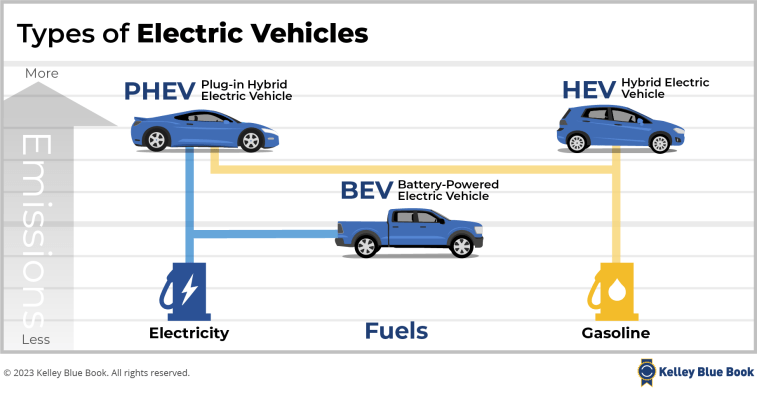
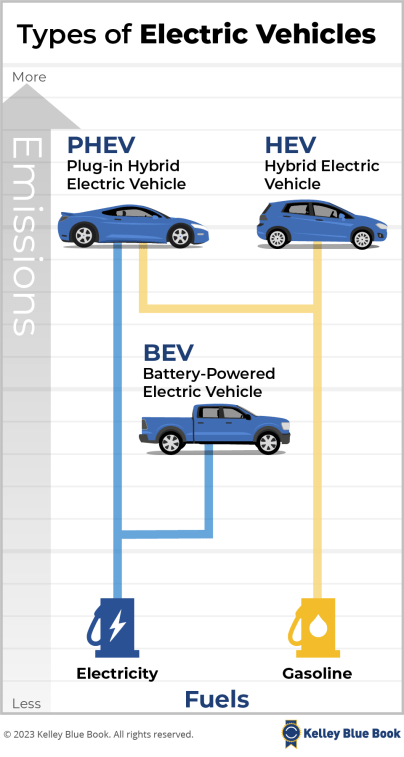
Our discussion here focuses on fully electric vehicles drawing all their power from a battery charged by plugging into an outside electric source. This excludes plug-in hybrids (PHEVs) and traditional hybrids (HEVs), which both have and rely on gasoline-fueled engines.
Let’s explore some of the issues we’ve raised, provide a few pros and cons for buying now, and then we’ll tell you what we would do if we were in your shoes.
Electric Cars: What Do They Cost?

Today, the average price of an EV in the United States is just above $56,500. Correct, that is luxury car territory. Of course, it’s an average; therefore, some EVs are priced lower and some higher. Only a handful of electric cars are listed for sale below $40,000. For example, those below that threshold include (with destination charges) the Nissan Leaf ($29,280) and the Hyundai Kona Electric ($34,270). The Kia Niro EV ($40,975) is just over that threshold. Most cost much more; consequently, manufacturers have priced electric vehicles beyond the reach of the average consumer.
Chevy stopped making its Bolt EV and EUV with a planned return in 2025 for the 2026 model year.
A few manufacturers like Nissan and Tesla have reduced their EV prices in the last few years. For example, Tesla dropped the price of its Model 3 by $3,750 and its Model Y by $13,000 in 2023. Electric car tax credit rules make them eligible for as much as a $7,500 credit.
These days, carmakers offer bigger incentives to entice consumers to buy electric vehicles.
For shoppers buying new EVs, Kelley Blue Book data shows carmakers offered an average incentive of 12% of the transaction price, the highest level in more than three years.
Lack of Variety in Electric Vehicle Models
In other words, the options will increase with time. Consequently, if you can’t find exactly what you want now, you may be able to in a year or two.
Plentiful Supply in the Automotive Market
EV Tax Credits You May Consider
Some electric cars can qualify for up to a $7,500 instant rebate at the dealership and used EVs as much as $4,000. We have covered many of the details elsewhere, and you can check them out in the latest version of our article on tax credits.
However, qualifying for the rebate or tax break depends upon your income. For example, the rebates are limited to individuals reporting adjusted gross incomes of $150,000 or less on taxes, $225,000 for those filing as head of household, and $300,000 for joint filers. It also depends on the price of the EV ($55,000 or less for cars and $80,000 or less for trucks and SUVs). To qualify, the EV must also be assembled in the United States, Canada, or Mexico. Unless you lease.
Fluctuating Auto Loan Interest Rates
According to the financial market experts at Bankrate, the fed funds rate in September was 5.5%. The same as a year ago. As a result of higher car prices and interest rates, the average monthly new car payment reached $753.
What’s Next?
Cox Automotive Economist Jonathan Smoke sees the Fed lowering the Federal Fund Rates this fall. Cox is the parent company of Kelley Blue Book. Consequently, auto loan rates could decrease by the end of the year, possibly bringing a little relief for car shoppers.
Pros and Cons of Buying an Electric Car Now

We’ve tried to avoid wading too far into the weeds. However, itemizing the pros and cons of buying an EV now should clarify things a bit more. Remember, these pros and cons aren’t based on whether you should buy an electric car at all. These are based on buying an electric vehicle now rather than waiting a year or more.
Pros
- Interest rates — If interest rates on car loans drop later this year, it could be worth the consideration when coupled with other factors below, especially if you have your heart set on a new electric car.
- Suggested car retail prices — Today’s average EV price remains far out of reach for the average consumer. However, manufacturer incentives, especially for the outgoing 2024 models at year-end, make it a great time to consider an EV at a substantial discount.
- Revitalized tax credit — For many, the best time to buy an electric vehicle was before some of the new tax credit regulations went into effect. However, if you want a car model eligible for up to the full $7,500 tax credit, it’s a great time to act, especially when paired with the manufacturer and dealer incentives. Check to ensure you meet income eligibility requirements.
- Plentiful inventory — In this fluctuating economy, demand for all new cars, including electric vehicles, could drop. Electric vehicle inventory is much higher. So, even if the MSRPs of electric cars stay the same, dealers seem willing to negotiate lower prices.
Cons
- Range — Although we didn’t mention it earlier, range anxiety is still among the more cited reasons for holding off on purchasing an electric car. What does that have to do with whether you should buy now? Nothing really, other than the average EV range increased significantly in the past decade and they are becoming more efficient as time passes. Consequently, in a few years time, you can likely buy an EV with a longer range a year or two from now, compared with today.
- Timing — Prices are high, and so are interest rates. If you don’t need a new car right now, you may do better staying on the sidelines until interest rates drop significantly. Higher interest rates can add a few thousand dollars to your bottom line.
- Depreciation — A George Washington University study found that EVs depreciate faster than gas vehicles. That said, longer-range vehicles may hold their value better. It’s a wait-and-see situation for now.
- Supply and variety — Many manufacturers cut back on the number of electric cars they plan to produce after promising an all-electric future. For example, Volvo recently scrapped its plans to only sell EVs by 2030. With fewer EVs available than gas cars, there’s less to choose from. Last year, Chevy discontinued its Bolt, one of the least expensive EVs on the market. Look for a new version to appear for the 2026 model year.
- Battery degradation — A study by Toronto-based GeoTab, which studies battery health in fleet cars, finds that most EV batteries degrade 2.3% each year. While carmakers provide warranties on EV batteries of up to 10 to 12 years, the degradation findings may be enough to scare people off if you decide to sell your EV down the line. Read more: Hidden Costs of Owning an Electric Car.
What Would We Do?
If budgeting were our number one concern, we’d wait until sometime in 2025. While it’s a roll of the dice whether interest rates will substantially come down for car loans, we bet they will in 2025. Additionally, tax rebates of up to $7,500 upfront help the bottom line if you and the vehicle qualify for the break.
However, if you can’t wait and you see an end-of-the-model-year price drop on the EV model you want, it might be a great time to buy now if you can also get a car loan with low to 0% financing. Before making any decisions, weigh all economic factors cautiously. Also, be aware that EV manufacturer Fisker fell into bankruptcy protection and is liquidating assets. You may want to think twice before buying a Fisker EV, whose company may not be capable of supporting owners going forward.
Read Related Articles: